Utrecht University starts design phase of circular faculty building for Veterinary Medicine
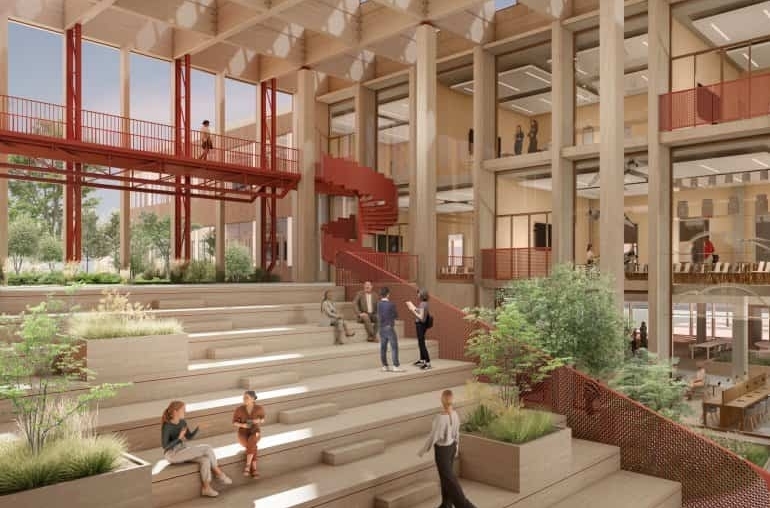
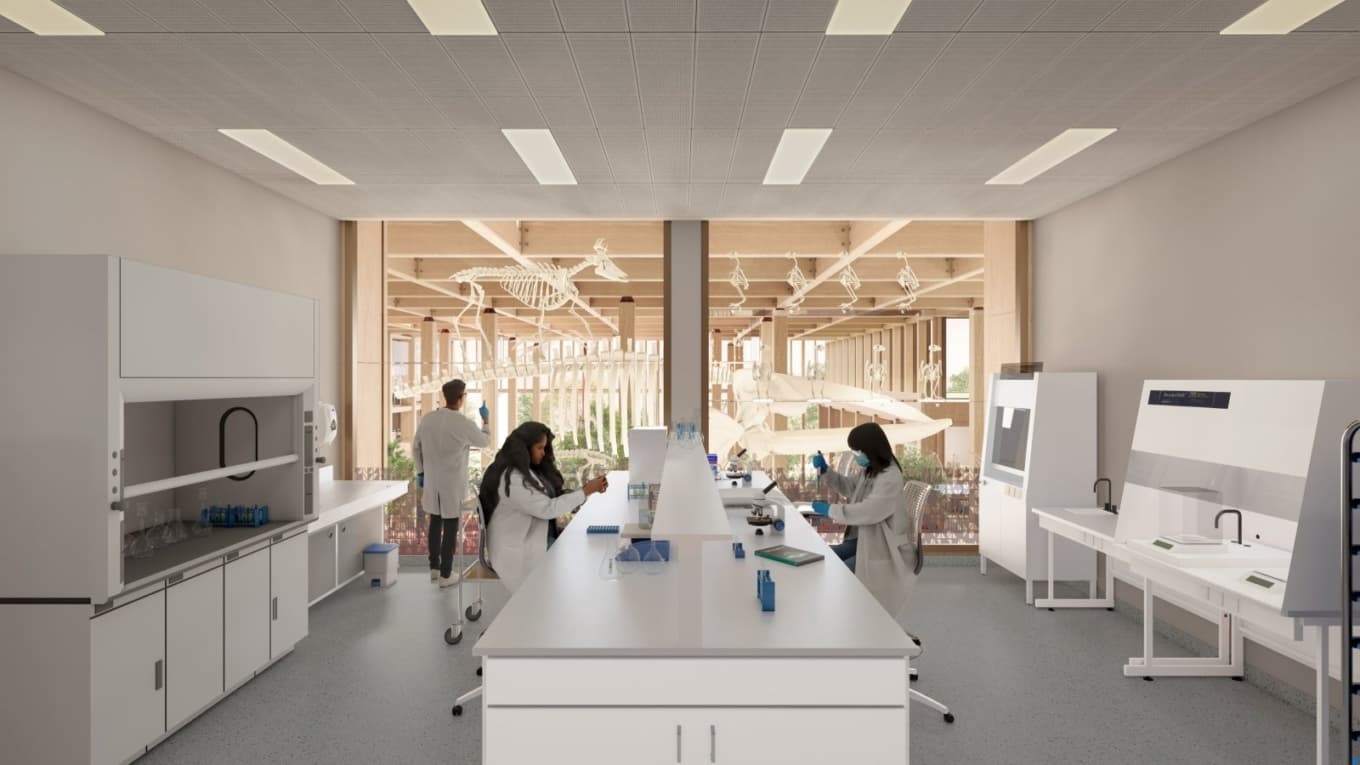
With the start of the design phase for the new faculty building for the Faculty of Veterinary Medicine, Utrecht University makes an important step in the transformation of USP East towards a future-proof and sustainable campus. The building will become an example of circular constructing and embodies the ambition of Utrecht University to put sustainability and innovation into practice.
A sustainable transformation for the future
The new faculty building will replace the outdated Martinus G. de Bruin Building (MGB), the Androclus Building and Nieuw Gildestein, and will be realised at the current location of the MGB. By means of supply-oriented design, materials from the current MGB are reused in the new construction. This circular approach minimises the impact on the environment, such as CO₂ emissions, and links up with the goal of Utrecht University to develop sustainable solutions. With the dismantling of these outdated buildings and the realisation of a future-proof faculty building, the university makes an important step in the broader transformation of USP East into a campus which stimulates innovation and collaboration.
“This project shows how we as a university not only teach sustainability, but also apply it,” says Vice President of the Executive Board Margot van der Starre. “With this building, we create an inspiring environment which contributes to the health of humans, animals and the environment, and provide a future-proof foundation for education and research.”
A store front of what Veterinary Medicine has to offer
DP6 architecture studio and Vakwerk Architecten have been selected based on their unique way of supply-oriented design and analysis of the task. An important part of this analysis is the spatial ‘Life Cabinet’. DP6: “We see the heart of the building as an inviting window displaying what Veterinary Medicine has to offer. The building will be a place where science, education and society come together and where interdisciplinary collaboration is encouraged.”
“It will be a building that breathes Veterinary Medicine,” says Debbie Jaarsma, dean of the Faculty of Veterinary Medicine. “With this project, we not only realise a sustainable and innovative learning and working environment for our students and staff, but also a place where we can further grow our expertise for a healthy world of tomorrow.”
Translation to design
With the start of the design phase, the Programme of Demands is worked out and translated into a design by Team DP6 together with UU. In this process, circular principles are worked out further. The preliminary design is expected to be completed late this year.
The start of the design phase is a milestone in the transformation of USP East and the realisation of the sustainable goals of Utrecht University. This project underlines the role of the university as a pioneer in the fields of circular construction and sustainable innovation.
Want to know more?
Read more about the transformation of the Utrecht Science Park and Utrecht University’s sustainable ambitions on Campus Development.
31 May running festival at Utrecht Science Park; read all about accessibility
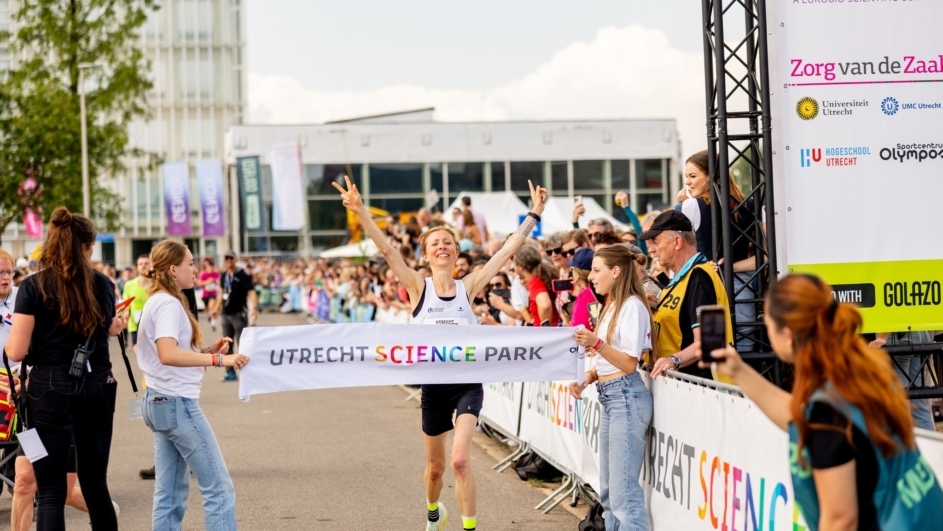
On Sunday 31 May 2026, Utrecht will once again be fully dedicated to the HiPRO Utrecht Marathon supported by Utrecht Science Park. With more than 18,500 participants in the previous edition, the event has grown into a staple for runners from Utrecht and far beyond. This year also promises to be a special edition, featuring the new addition of the Dutch National Championships Half Marathon (NK Halve Marathon). Utrecht Science Park will once again be the vibrant heart of the event, where sport, energy, and connection come together.
Jan Henk van der Velden leaves Utrecht Science Park Foundation and becomes the new Managing Director at Utrechtse Heuvelrug National Park
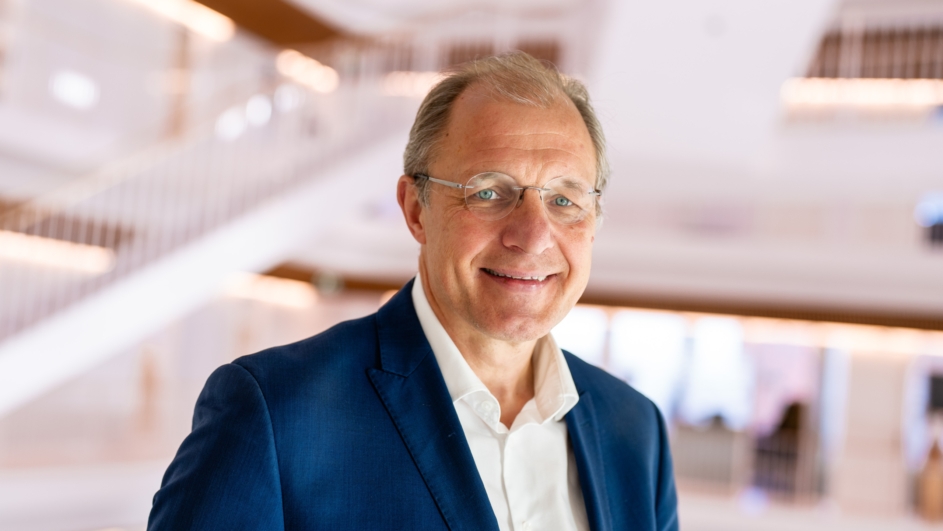
After nine years, Jan Henk van der Velden will step down as Managing Director of the Utrecht Science Park Foundation effective this coming July 1. As of September 1, 2026, Jan Henk will become Managing Director of the Utrechtse Heuvelrug National Park Foundation. He announced his departure several months ago.
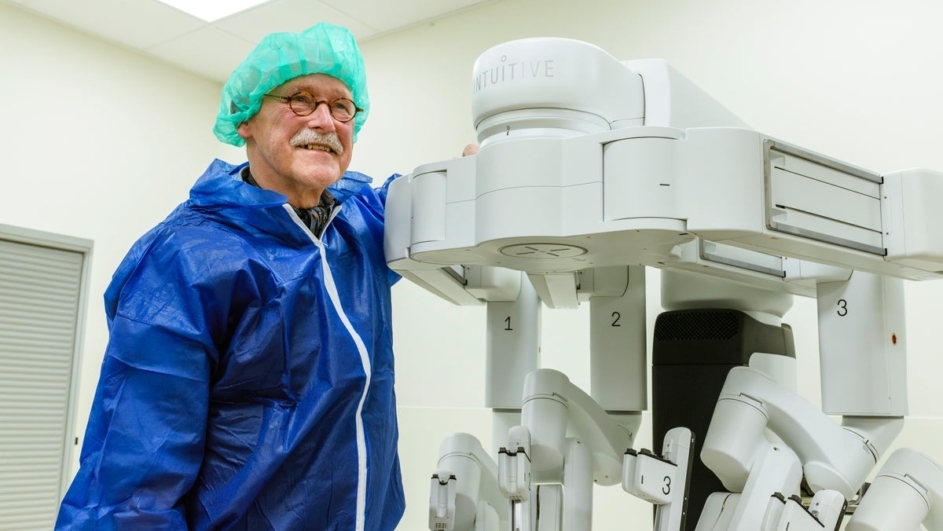
UMC Utrecht takes third surgical robot into use
UMC Utrecht has commissioned a third surgical robot. With the arrival of the latest generation, the Da Vinci 5, even more patients can be operated on with minimal stress. This leads to fewer complications and faster recovery. “Apart from the benefits for patients, the Da Vinci 5 also allows us to train even better,” says Jelle Ruurda, gastrointestinal surgeon and professor of robot-assisted minimally invasive surgery. “At the touch of a button, colleagues can watch remotely, and even learn from previous operations. This way we share knowledge faster and more widely.” The hospital is thus building on a tradition of 25 years at the forefront of robotic surgery.
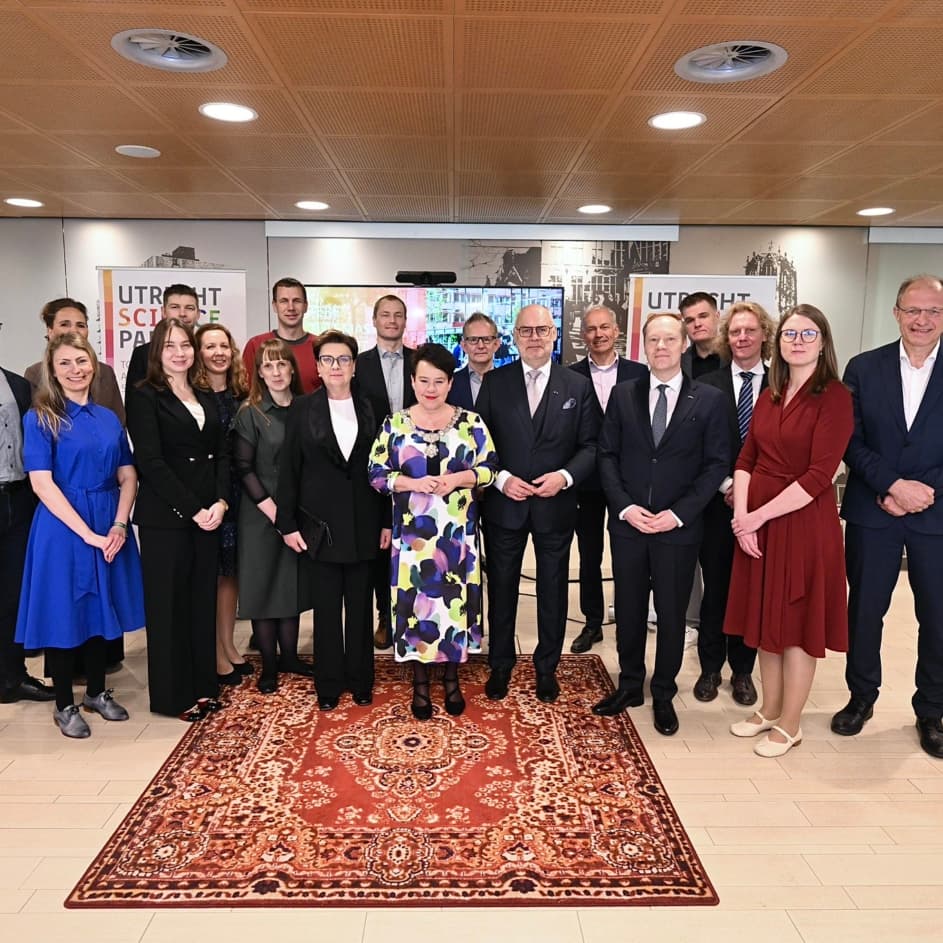
Inspiring and connecting visit by the President of Estonia to Utrecht Science Park
On Wednesday, April 8, 2026, the President of Estonia, Mr. Alar Karis, together with his wife Sirje Karis, ambassador Mr. Paul Teesalu and a delegation from the Estonian Health Ecosystem, visited the Utrecht Science Park. During the visit, much knowledge was exchanged and valuable connections were made.